Thursday, April 1, 2010

4. Waiting for Gilligan - (Vance Gilbert)


"I know folks who laid side by side for years and never knew that they were stranded."

Just sit right back and you'll hear a tale... a tale of one of the greatest songs you've never heard.

(Yet.)

Vance Gilbert's "Waiting for Gilligan" -- not exactly a household name or a jukebox mainstay. But no matter; the song is brimming with literary allusions, and it's friggin' brilliant, to boot.

A quick summary:

The weather started getting rough and the eponymous star of the famed 1960s TV series ended up shipwrecked on a desert island with Ginger, Marianne and the rest. Familiar story, right? Right.

.... but what about the love he left behind?
Gilligan: Oh snap!

Suddenly, we've got ourselves a new twist on an old classic: it's the same basic Gilligan narrative we all know and love, but this time, it's told through the eyes of the girl that our hero left back on the shore. Even though all hope seems lost, Gil's gal ("Gal-ligan?") keeps a "lonely vigil" day in and day out, watching the waves and staring off at the horizon in a desperate hope that her man will indeed find his way back home to her.

It almost seems like she's been doing this forever.

People call her crazy. An entire generation has come of age on her watch. And she has no sign or reassurance that the waiting will ever pay off in the end (after all, "the short-wave [radio] has been broken down for years"). But still -- and perhaps even in spite of herself -- this gal can't help but cross her fingers "with every ship that makes the trip back home."

After all -- she's doing the only thing she knows how to do: "I'm waiting for Gilligan."

Equally humorous and heartbreaking, ya' know? Why it's almost absurd. Here's an excerpt of
an interview with old Vance himself in which he practically says as much:
"[People] can laugh at the top, I don't care because there is a lot more song to go at that point. But then there is a line "If faith and hope were made of gold I would wear that crown because I'm waiting for Gilligan." [And] suddenly that's not funny anymore. Like, this is a real definition of somebody waiting and pondering love and its just not going to be funny then."
So lemme' get this straight...

We've got a narrator who's wholly determined but totally stranded and helpless to change their situation, yes? And they're waiting for somebody to arrive in spite of the fact that all reliable signs tell them that such an effort is completely in vain?

Yup, definitely read this one before:
Waiting for Godot (1949)
- Samuel Beckett

Beckett's "tragi-comedy" pretty much defined the literary movement which would come to be known as the "Theatre of the Absurd." What's "Theatre of the Absurd," you ask? Simply stated: plays in which there's a whole buncha' stuff happening, but there's with no real meaning to connect it all. It doesn't have to make sense. Things just -- happen. People don't get what they earn or get what they deserve: they simply get what they get.

Here's the five-second recap of
Wating for Godot:
Two regular guys (Vladimir and Estragon -- or Didi and Gogo, for short) waste an afternoon in conversation while waiting for this fella' named Godot. They don't quite know *why* they're waiting, of course, or *if* he'll even show up in the first place (they did the same thing just yesterday, as a matter of fact, and he was nowhere to be found) -- but still, they keep their daily vigil all the same. Because if Godot doesn't quite manage to make it out to find them today, and if he didn't quite manage to make it out to find them yesterday, well then surely this means he'll arrive all the sooner tomorrow, right?

Ha.

Is it "commitment," or is it "crazy?" Humorous? Or heartbreaking? Heck -- some might even say it's (wait for it...) "absurd." And intermittently throughout the play, Didi and Gogo occassionally seem to catch on to this fact:

Estragon: Let's go.Vladimir: We can't.Estragon: Why not?Vladimir: We're waiting for Godot.Estragon: (despairingly) Ah!
Its almost seems like they've been doing this forever (hey wait a second...)

But in spite of themselves, the duo is resolved: they will do today what they did yesterday, and then do it all over again tomorrow, if they have to.

After all -- they're doing the only thing they know how to do: "We're waiting for Godot."

(I'll give you two guesses on how *that* one turns out...)
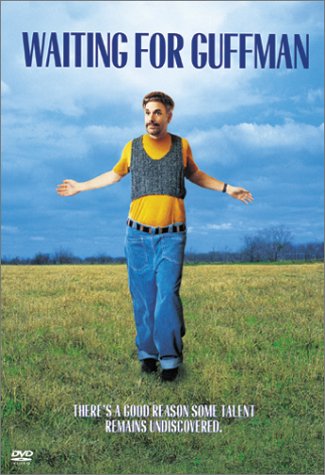
Corky St. Clair: I can't put up with you people: because you're BASTARD people!

Ahh, but that's a story for another day. Tell you what: let's leave it here for now, and why don't we pick right up where we left off tomorrow, yes?

...

...

(... see what I did there?)

*PS: If you're reading this entry anywhere outside of the original blog location, click here and you can listen to the song, too :)

Monday, February 1, 2010

3. Words of Wisdom - (Jump, Little Children)


"If I cannot follow where you go / I promise to teach what I have learned."Oh man, Jump Little Children were so freakin' great. This song is particularly heartwrenching, and it totally nails that often elusive songwriting balance between wonderfully vague and unflinchingly direct.

Here's the backstory:

The lead singer's father has just died. In mourning, the singer (we'll call him Matt, because -- well -- that's his name) writes a song -- a "bittersweet melody." He "long[s] for that embrace, the strongest arms / that troubled face" that made [him] feel safe." And he begs the recently departed to "leave [him] some words of wisdom" as he tries to make sense of this new life alone.

Clearly, he's not taking this too well.

So basically, this entire piece is really just one big old eulogy for dear old dad, right?
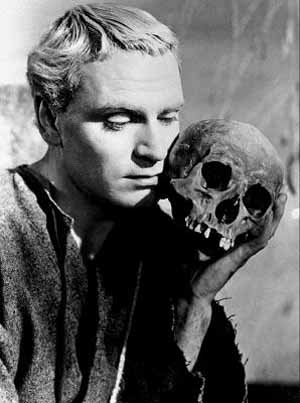
Hamlet: You rang?!?

Maybe, maybe not.

See, like the best works of literature, a really well-written pop song actually lends itself to a wide array of thematic interpretations. Hamlet isn't *just* about doing right by your dead father. It's about finding one's place in the world. It's about searching within one's self for the answer to that all-important question posed in the very first lines of the play ("Who's there?"). And it's about taking the necessary time to discover what it means "To be, or not to be."

Now sure, as is the case with great literary analysis, there's an "acceptable range" of what all a song *can* and *cannot* mean (example: when our buddy Matt sings "
if I cannot follow where you go, I promise to teach what I have learned" -- he's probably not talking about eeking out life-lessons while tailing some dude on his way to a one-stall men's room. Well okay, maybe). But by and large? The songwriter has pretty much laid bare some universal themes here, and now it's up to us, the audience, to make sense of things.

So let's do exactly that. And since we're obviously dealing with some heavy subject matter, let's do it by looking at this song as it relates to the similarly universal themes on human suffering and sadness, as once so famously put forth in the ever-handy "Kübler-Ross model" (a.k.a. -- the five stages of grief).

Take it away, Wikipedia-level understanding of advanced psychological theories!

Anger: ("Fortune smiles with teeth of jade, and the greediest eyes")Translation: "Greed. Argh! Boy, I'm pissed that you've been stolen away from me."
Denial: ("How do years so far away so suddenly evaporate?")Translation: "Man, I can't believe this is actually happening."
Bargaining: ("If you will go and not return / leave me some words of wisdom.")Translation: "Go if you must, but please -- one last thing before you do..."
Depression: ("Who was it that said to me / that heroes would live forever?")Translation: "I'm a sad panda."
Acceptance: (If I cannot follow where you go, I promise to teach what I have learned.")Translation: "Well, ok then. This sucks and it'll take time, but I'll try."
Hey cool.

The figurative language opens the song up so well that the songwriter's once intensely personal eulogy for his late father actually becomes a broader commentary on the universal themes of life, love, and loss. Suddenly (just like
Hamlet), we're not just talking about the simple case of some dude who's trying to make peace with his dead father anymore.

You want to follow, but you know you can't.

You've given your all, but still you're left standing all alone.

And even though you might well have accepted that things simply had to change, you're certainly not over it -- no sir, not by a longshot.

(Damned ear poison)

Wow. This just got deep in a hurry. Infinitely more universal, too. Heck, when you look at it *that* way -- one might even call this a tailor-made breakup song. And for a track that doesn't once mention the word "love" -- that's quite a feat. Crazy, right?

Yay figurative language!

(... now get thee to a nunnery...)

2. The Scientist - (Coldplay)


"I was just guessin' at numbers and figures / pulling the puzzles apart."
Poor, poor Chris Martin.

Sure, the guy might have ended up with Gwyneth Paltrow, but deep down? He's a total science dork. I mean seriously -- just look at how often the guy finds himself singing about outer space, "questions of science," and other similarly themed poindextery stuff:

"Look at earth from outer space" (Politic)"You and me are drifting into outer space" (X&Y)"All of the stars and the outer space" (White Shadows)
(In retrospect, this could explain the whole "virgin until his mid twenties" thing).

But getting to the song at hand --

We've got ourselves a scientist. And not just *any* scientist, mind you -- but "THE" Scientist. As in a guy who pretty much defines his entire self through his life's work. He's brilliant, probing (heh heh heh), coldly analytical -- and dangerously good at his job accordingly. After all -- a mind for "pulling the puzzles apart" is a must-have when dealing with "questions of science." Wouldn't you agree?
Dr. Gregory House: Word, dawg.

Ok -- so we've got ourselves this scientist, yes? And when it comes to solving analytical puzzles? Dude's a friggin' genius. But when dealing with matters of the heart?

Not so much.

Hmm -- a science dork who just can't seem to make sense of human relationships? Kinda' reminds me of another tortured genius with a Ph.D. from roughly 400 years earlier.
The Tragical History of Doctor Faustus (1604)
By Christopher Marlowe

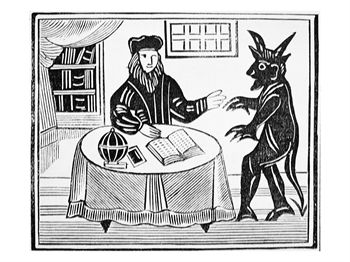
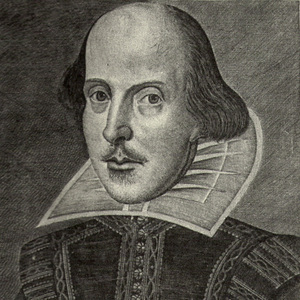
When it came to Elizabethan playwrites, there's no question that Billy Shakespeare was the man to beat. But if Shakespeare was the shit, then Marlowe was -- at the very least -- the urine (how's that for a colorful metaphor? Thanks, Kanye). And Marlowe's wildly controversial
Faustus was pretty much the closest thing to Better-Than-The-Bard to have emerged from the whole of the 17th century.

The story is simple:

Dr. Faustus is a genius, but he's not satisfied with simply being the smartest guy in the room. Instead, he wants to be the smartest man IN THE WORLD, and so he makes a deal with the devil to trade his soul for exactly that. Mephistophilis (being the devil and all) is more than happy to agree -- and so he makes Faustus an uber-genius, but promises to steal him back to hell as per their agreement some 24 years later.

Flash forward 24 years...

Just as Mr. Fausty Pants is hitting his stride as "the smartest man in all the world," he comes across a total knockout of a ladyfriend (in the form of one Miss Helen -- of Troy fame). And whaddayaknow -- our forsaken superdork falls madly in love.

(Wanna' guess how well *that* turns out?)

How about we leave the summary to the immortal words of the good doctor himself:

"Why this is hell, nor am I out of it.
Think'st thou that I, who saw the face of God,
And tasted the eternal joys of heaven,
Am not tormented with ten thousand hells
In being deprived of everlasting bliss?"
Ooooh, BURRRRN!!! (literally)

Or as our good friend Chris Martin might say --
"Tell me you love me, come back and haunt me..."

Just when you think you've got all the important stuff figured out, love comes in and changes the questions. Boy it sucks to be you, Faustus (and that goes double for The Scientist). But unlike Marlowe's hell-bound physician, Coldplay's lovesick scientist actually has a brief chance at redemption. As he sings:


"Nobody said it was easy
[but] no one ever said it would be this hard
I'm going back to the start."
In other words: when your world falls down, take a good, hard look in the mirror and get right with yourself.

Aww, that's nice.

Too bad it's blatantly cribbed from Yeats:

"Now that my ladder's gone,
I must lie down where all the ladders start
In the foul rag and bone shop of the heart."

- William Butler Yeats, "The Circus Animals Desertion" (1939)
(Why they even borrowed the whole "heart" / "start" rhyme. How clever).

Wait -- COLDPLAY?!? STEALING MATERIAL FROM OTHER ARTISTS, you say!?!

Hey, songwriting's a tough bizniss. Or, in Chris Martin's own words:
"Nobody said it was easy."

Friday, January 1, 2010

1. Semi-Charmed Life - (Third Eye Blind)


"I want something else to get me through this / Semi-charmed kinda' life."

Sex, drugs, and rock & roll, and a roaring ode to tripping on crystal meth and meaningless one-night stands. Boy, Stephan Jenkins and company certainly have the life, eh?

Not so much.

The poppy sound of Third Eye Blind's breakthrough single goes a long way to mask the deeper message at play (kinda ironic, since they come right out and state it right there in the title and again in each chorus... but whatever). Yeah, things sure
seem all well and good -- but the band knows that this is all just a string of temporary highs in their otherwise unfulfilled existence. As Jenkins sings: "I want something else to get me through this / semi-charmed kinda' life."

Hey waitasecondhere -- a "charmed kinda' life?" Where have I heard something along those lines before?

Oh that's right:
"I bear a charmed life."
- Macbeth, V.8
In Act V of the-play-we-cannot-name, the would-be Scottish king waxes philosophical about his lot in the world. His life is "charmed" (the witches told him as much in Act I). He literally got away with murder. He's got a kingdom. A sweet castle. All the wine he can drink. A beautiful bride (nutty though she may be, ya' just know that Lady McBeth is a total dynamo between the sheets). And -- in most stage adaptations -- a kickass beard.

In short? Sex, drugs, and heads-will-rock-&-roll. Macbeth does indeed "bear a charmed life." He's riding high on fortune's wheel. And he practically dares the enemy to come and get him, since everything is just so gosh-darned perfect.

(To the surprise of ABSOLUTELY NO ONE, guess who dies almost immediately thereafter?)

Literary allusion FOR. THE. WIN.

Third Eye Blind's "Semi-Charmed Life" is a modern-day reflection to exactly the same sort of "charmed" life so famously lauded by the Bard's tragic hero of the Highlands. Yeah, things *seem* good -- but is that all there is? If Macbeth's fate is any indicator: not likely. Fun is fun. But there's gotta' be "something else to get me through this / semi-charmed kinda' life."

Best guess?

It sure ain't crystal meth.